This is the fourth issue of my monthly newsletter, originally sent to subscribers on August 25, 2026.

Let’s dive in!
You signed up to an investing newsletter, so let’s jump into the deep end. In this issue, I’m going to share the outlines of my private market investing plan, including how and why I invest in both real estate and small businesses, how such investments are typically structured, and what is changing in the lending space to make this more challenging.
My investing plan
My main financial goal post-W2 is to invest the cash proceeds from selling my concentrated CFLT stock position in private markets into income-producing assets. The motivation should be obvious: I need to increase my income to cover spending in the absence of a W2. Plus, I don’t want to increase my already substantial public equity exposure at the start of my “retirement,” due to sequence of returns risk potentially impairing the long-term portfolio growth.
The key to my plan is to pair real estate and small business investing:
- Service-oriented small-to-medium sized businesses (SMBs) can generate significant income relative to investment capital, but are very tax inefficient since business distributions are typically taxed as ordinary income.
- Real estate can generate significant paper losses due to depreciation, especially with cost segregations and bonus depreciation available. Even with these paper losses, they can generate reliable income from rents as well.
Often times, there are more losses from real estate than can be used in any given year. Unless you qualify for Real Estate Professional Status (REPS), which we don’t, you can’t use these losses to reduce taxes from active income. And after leaving my W2 our active income is much smaller anyway. This means that these losses are effectively suspended to use in future years. However, you can use it in the current year to offset other passive income … such as from small businesses you also own. 💡
Sidenote: It’s not obvious, but the tax code actually recognizes 3(+) kinds of income: active income, primarily wages; passive income, such as real estate or businesses that you’re not actively operating; and portfolio income, such as dividends, interest, private credit. So you can’t use passive losses to offset portfolio income; no using real estate losses to shield your stock dividends or hard-money loans, sadly.
In theory, this should provide a highly tax-advantaged income stream with significant upside potential from both the real estate and small business assets.
Typical investment structure
What do real estate and small business investment structures look like in practice?
In general, you can either directly acquire the entire asset (control) or purchase a minority position by investing with someone else. I’ve taken both of these approaches, for both real estate and small businesses in the past.
If you’re investing with someone else, the person who organizes the deal is called the sponsor, the person who will manage the asset is called the operator, and everyone who provides equity capital are the investors. Oftentimes, the sponsor and the operator are the same person/company, but not always. Ideally the sponsor also provides capital so that they have more “skin in the game”, but personally guaranteeing the acquisition loan or leaving a lucrative career to run the business at a reduced salary are also forms of skin in the game.
At this point, I have a real estate investing partnership with a trusted operator focused on multifamily apartment buildings in Chicagoland, and we occasionally invite outside investors, so I prefer direct real estate acquisition where possible. However, I occasionally invest with other sponsor-operators for geographic and asset class diversification (e.g., self-storage, mobile home parks, etc).
For SMB investing, I’m focused on minority positions with self-funded searchers (tl;dr people raising money to buy a specific business they have under contract already and that they plan to run as CEO). From an investment perspective, these may be very similar to investing in real estate syndications. However, the variety of businesses is enormous; there are so many business models I’ve never even heard of before encountering a deal. And unlike real estate where you often take a programmatic approach (rinse and repeat across properties), small businesses are typically snowflakes and incredibly dependent on the sponsor-operator.
While there are a wide variety of return structures used, I’ll describe one of my favorite investor-friendly structures: a cumulative participating preferred return.
- Preferred return: there is a target rate of return, similar to a bond but without any actual contractual guarantees. It is not debt, but it is higher on the capital stack than common equity. The “pref” rate, as it’s called, is often in the range of 6-8% for real estate and 8-12% for small businesses. This rate is multiplied against your unreturned principal in the deal; if there’s been a refinancing event or return-of-capital payments, then this only applies to your remaining capital in the deal.
- Cumulative: if the rental or business doesn’t have enough free cash flow to pay the preferred return every year, it is added to the “principal” and compounds at the preferred rate of return until it can be paid down via operating income or a liquidity event. Some growth-oriented investments target to accumulate your pref until the liquidity event so they can fund growth investments from cash flow.
- Participating: after you’ve received your full preferred return and your initial capital back, your preferred shares effectively “convert” to common shares. In the venture capital world, we would say that you have a 1x “liquidity preference”. This can provide additional cash flow if the business or rental makes distributions, in addition to further upside upon exit or other liquidity event.
This structure is common in both real estate and small business acquisitions. It guarantees that investors receive their capital back before the sponsor, who receives common shares for their effort, can take regular distributions or profit from a liquidity event.
Note that the sponsor can still receive income from salary (e.g., for acting as the business’ CEO) or from fees (e.g., an acquisition fee or ongoing management fees are common in real estate deals). However, the intent is that the majority of the returns come from improving the asset; thus, distributions from operating income and gains from refinancing or selling the asset are gated by this structure.
What’s changing?
The majority of small businesses are acquired with SBA 7(a) acquisition loans. The SBA effectively provides “insurance” to help the banks underwriting the loans recover their losses in case of borrower default. Otherwise banks would have much less appetite to lend against such risky assets. Additionally, the SBA requires standard rates and terms that result in much more borrower-friendly loans.
On August 14th, the SBA issued a new SOP (set of rules) that have a dramatic impact on business buyers using external investors like me. I’m happy to share a full summary for those interested, but the key items that impact investors:
- Sponsors must provide equity from their own funds equal to at least 5% of the total project cost. Example: If the total project is $5 million, sponsors must bring in at least $250k, and the rest could come from investors. Many sponsors are fresh MBA graduates from top universities that teach entrepreneurship-through-acquisition; as such, they may be young and hungry but lack sufficient resources for the required equity injection. The sponsor I spoke with today is injecting $700k personally, but that’s still below the new 5% requirement for this larger deal we’re working on.
- Whoever provides the next 5% of the required equity injection is not allowed to receive distributions (other than tax distributions) until the SBA loan is fully paid off (typically 10 years term) unless they also sign a personal guarantee for the full loan amount.
- There are other detrimental changes too, such as owning your shares in a trust (revocable or irrevocable) now requires both the trust and the grantor to personal guarantee the loan.
None of these conditions are acceptable to most investors.
- The lack of distributions kills your IRR, unless the business is very high growth; and very high growth businesses are much more likely to fail outright over a 10-year period, relative to a moderate growth business.
- You don’t want to make a $250k investment to own 10% of a company, but be on the hook for a $5M loan if the business fails. That’s asymmetric risk in the wrong direction for investors.
We’re still digesting the implications of these changes. The first-order prediction is that fewer young-ish buyers will be able to acquire an existing business of any scale. This may or may not move prices downward for buyers; fewer sponsors doesn’t mean fewer investors, so it’s likely that existing money will likely end up concentrating toward fewer, larger deals backed by qualified mid-career sponsors instead.
Of course, the silver lining here might be that less competition from other buyers and potentially even lower business prices might convince well-capitalized, operationally-minded investors like me to step into the sponsor seat, put more skin in the game (like a personal guarantee) and work on taking control ownership alongside operating partners. I would imagine that this is the goal of the SBA’s new SOP, which would further reduce default risk for them. It’s still early to see the full fallout of this change, but I’ll be watching for opportunities.
P.S. if you’re interested in running your own business and want to buy one together (especially if you’re willing to relocate), let’s talk!
⚕️ Special follow-up: what about health insurance?
It turns out that IBM’s new COBRA plan is even more expensive than Confluent’s. IBM has Progyny which looks like a great IVF insurance plan. But it would still break even after accounting for sunk prepaid costs for Costa Rica IVF. And we’d have to cancel our world-schooling adventure, which is one of the main reasons I left my W2. So, we’re moving off COBRA entirely and switching plans again.
We still require a national insurance plan, which rules out any ACA marketplace plan. I worked with Amber Flanagan, the health insurance broker mentioned last issue, to enroll my wife’s company Quill & Cup (IG) in Local 426, the Gig Workers Union. Now I’m working with CPAs to qualify for the self-employed health-insurance deduction under §162(l). With the right setup, this should result in an above-the-line deduction to effectively make health care premiums tax-free, including from Social Security, Medicare, and FUTA wages.
We’ve now had 3 different healthcare plans in 3 months post-W2. 🥵
👨🏽🌾 Personal updates
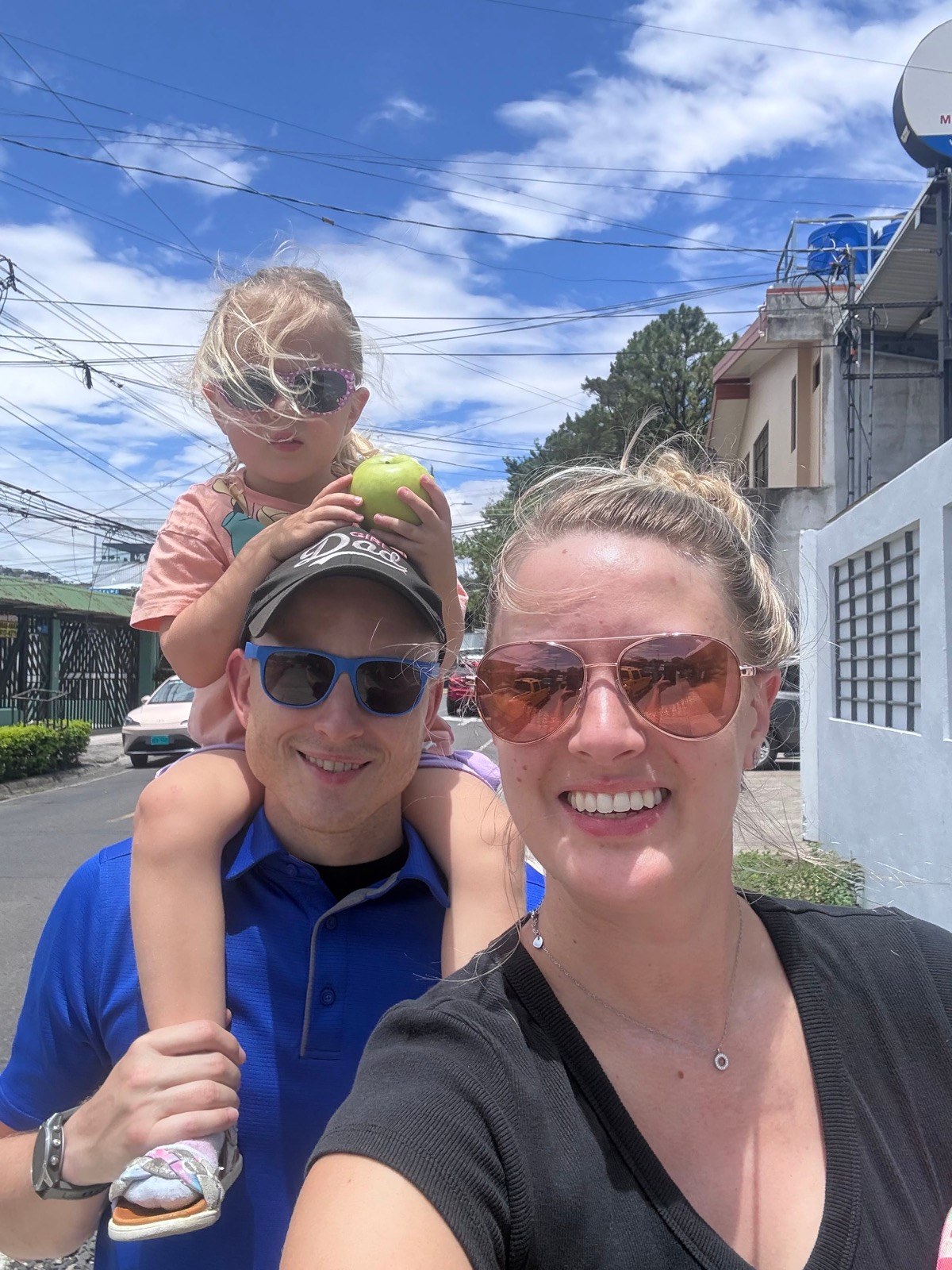
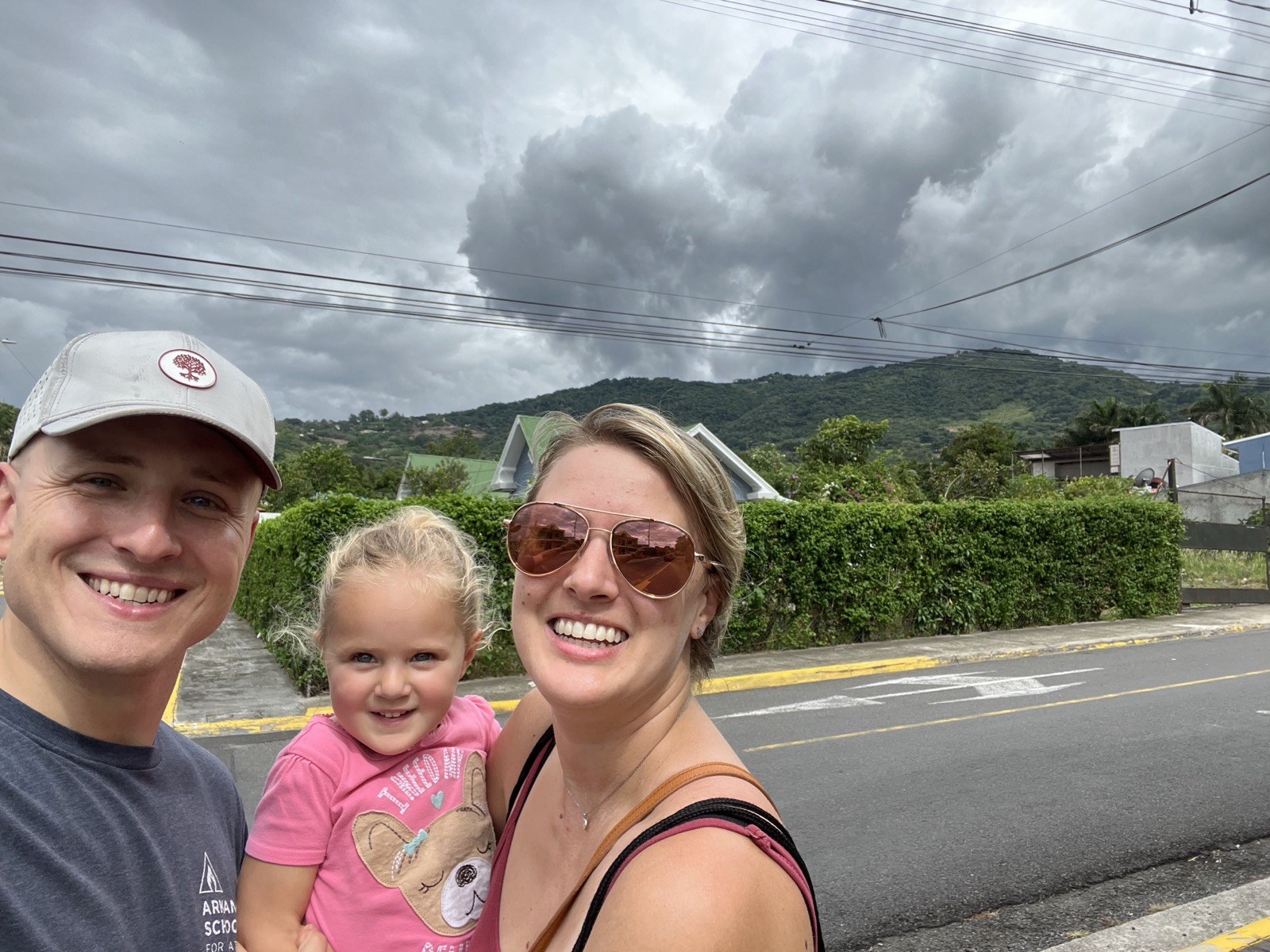
🇨🇷 We are settled in Costa Rica through the end of October. We ended up pushing our arrival back by a week.
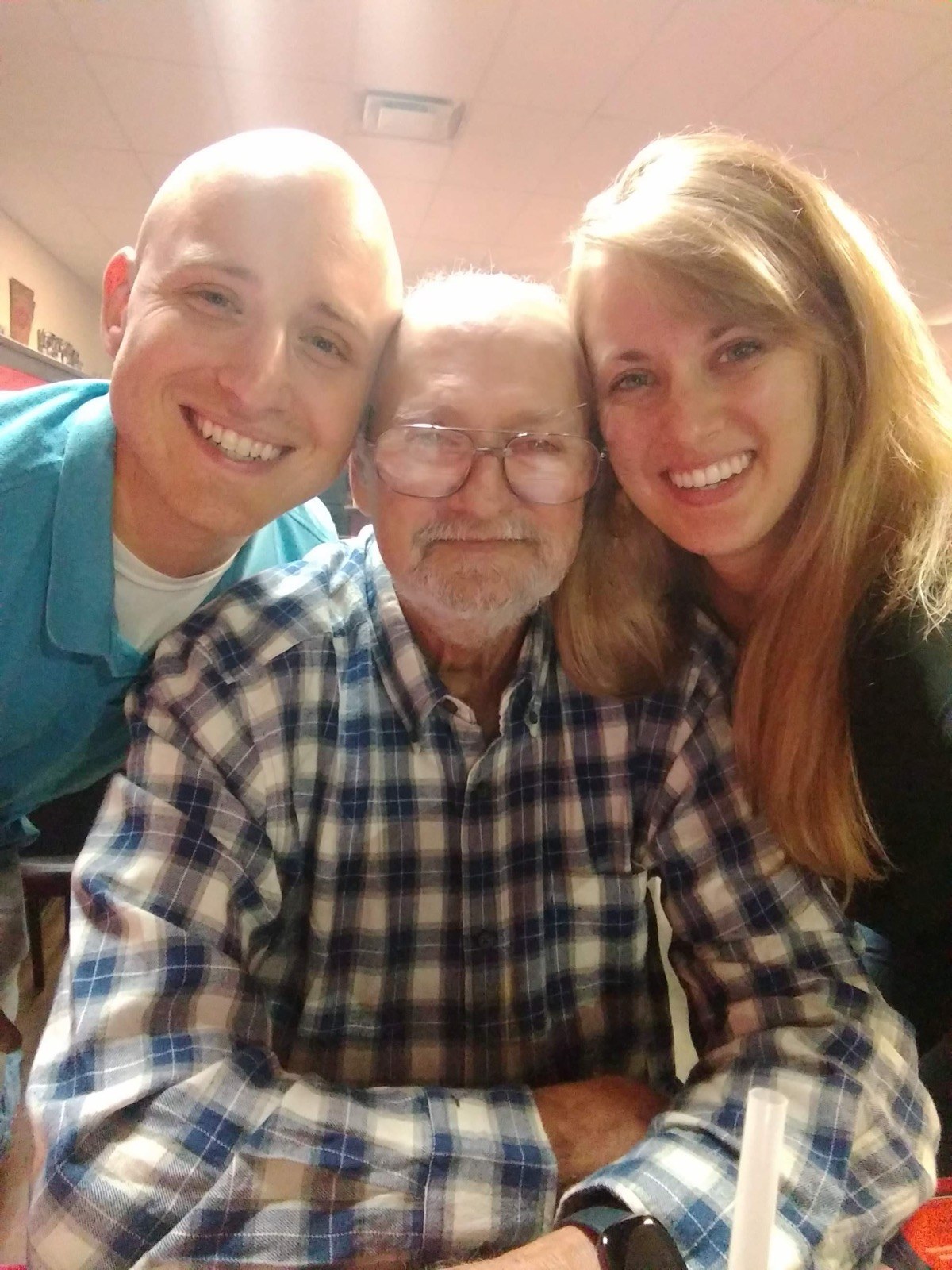
💔 Papa Ray (my dad’s dad) died unexpectedly the day before we were scheduled to depart. He was a major influence in my life. I spent almost every summer working on his farm, driving the tractor, baling hay, and throwing hay bales into a hot barn. He was an incredibly hard worker, but I can’t count the number of times he told me “work smarter, not harder”. He taught me the value of work, and how to work hard.
Fortunately, my toddler effectively demanded a trip back to see the grandparents before we flew to Costa Rica. We booked an impromptu trip, which gave us the gift of seeing Papa a week before he passed and getting to say great goodbyes. His health had been declining, so in May I hosted an extended family retreat. My family, my sister’s family, our parents, and all of our remaining grandparents spent a long weekend together at a nearby lake house. One of the best investments I’ve ever made. Priceless memory dividends.
🐣 The day after we arrived in Costa Rica, we had a blood draw at the IVF clinic. About twenty minutes later, they said “ok, we’ll give you a call in 1-2 months”. Uhhh, we told them we’re only here for 3 months. But there’s nothing we can do in the meantime, but live a life in the waiting, again.
🏫 We’ve enrolled our toddler in a language immersion school here. The primary language is Spanish, but they also teach English and Portuguese. It’s a Montessori program with abundant outdoor time, which our daughter loves.
🗣️ I’ve also enrolled myself in Spanish small-group classes while I’m here. It’s great to be learning in-person again! If you don’t know about Anki, it’s a great mostly-free flashcard app based on spaced repetition learning. It supports web, desktop, Android, and iOS (paid, a $24 one-time fee). I took a photo of the printed worksheet from my class and had AI create a flashcards file to import into Anki for studying.
👨✈️ After running the numbers of flight lessons, I’ve decided to compress them into a concentrated block next year. Certification requires a minimum of 40 flight hours, but most people require 60-70 hours. My instructor suggested a (very) conservatively plan for 100 hours. At $500 for 1.5 flight hours, that becomes very expensive. So my plan is to compress the timeline so I don’t need to re-learn material as often as I would with breaks. I’ve also assembled a nice, portable(ish) desktop simulator (shown above) to practice maneuvers on the ground. The more self-study I get, the more I should be able to minimize “excess” hours in the air and keep costs manageable.
🤓 Overall, I’m very excited about learning opportunities in my post-W2 life. One of the reasons I enjoy SMB investing is learning about all the different business models and areas of industry. But reading The Preparation earlier this year inspired me to continue investing in learning and skill-building that may not have any obvious financial return. Spanish classes and flying lessons are a clear application of this thinking.
🌎 Where are we traveling next?
- 🇨🇷 We’ll be living in Costa Rica from August through the end of October. Fingers crossed that we come back with a bun in-the-oven if our Costa Rica IVF journey is successful!
- 🇺🇸 We’ll spend holidays with our families in Arkansas and Chicago.
- 🇯🇵 We’re going to worldschool our children in Japan in Q1 2027.
We are very “open itinerary”, so if you want to meet up with us or know someone we should meet along the way, reach out and let us know!
📚 What I’ve read recently
Education of a Wandering Man — This is the Louis L’Amour memoir. I was inspired by both how well read and how well traveled Louis L’Amour was. He read an absurd number of classics and fiction books on a wide variety of topics, diving into various rabbit holes that piqued his interest.
The downside is that the book is written almost like a list of everything he’s ever read. And only a few other memorable stories to accompany it. This made for a less enjoyable read.
That said, much like The Preparation from the first issue, it increased my interest in classical education, spending more time on history, autobiographies, philosophy (direct rather than interpreted by Ryan Holiday or Brendan Barca), and similar. What should be my follow-up to The Count of Monte Cristo?
Life Is in the Transitions: Mastering Change at Any Age — I liked the author’s ABCs of meaning framework: agency, belonging, and cause. I’ve often referred back to Dan Pink’s three intrinsic motivators from Drive (autonomy, mastery, purpose). While not directly related, I think there is a Venn diagram style overlap here (agency and autonomy; cause and purpose).
Otherwise, this book was super hard for me to finish. Perhaps it was because I was in the middle of a series of life transitions myself, but I think it was the way that the author referenced so many stories from his interviews in small snippets all over the place. I understand this was his “source material” but it left it hard for me to walk away with something concrete or actionable.
The Will of the Many — Fantasy book with a unique system of power and politics at its core. Society is organized into a hierarchy where each level feeds on half of the “Will” of the levels below them, which translates into physical strength, mental acumen, and social power. There’s an epic historical mystery at its core, similar to Sanderson’s ages or other great epic fantasies, with a whole background to spend exploring and understanding as the series evolves.